AACC Convenes Continental Consultation to Strengthen Women’s Leadership in Peace and Security
Women sustain peace in communities across Africa, yet their influence remains limited in many of the processes where peace is negotiated and decisions are made. Addressing this gap is at the heart of a three-day stakeholders’ consultation convened by the All Africa Conference of Churches (AACC) at its Desmond Tutu Conference Centre in Nairobi, Kenya. The meeting began on 3rd November 2026 and will run until 6th November 2026.
Held under the theme “Strengthening Women’s Meaningful Participation and Leadership in Peace and Security Processes in Africa,” the consultation brings together women leaders, peacebuilders, mediators and partners from conflict-affected countries. Participants will contribute to an AACC Engendered Women, Peace and Security Framework to guide the work of the conference, its member churches and partners.
The opening devotion was led by Rev. Agnes Chomba of the Kenya Evangelical Lutheran Church. She grounded the gathering in biblical examples of women’s contributions to peacebuilding and encouraged participants to draw inspiration from these women and carry their courage and commitment into contemporary efforts for peace. While welcoming participants, AACC’s Director for Gender, Women, Youth and Sustainable Population, Ms. Ann Njeri Kioi, welcomed participants as experts and co-authors rather than an audience. She noted that women are at the center of peace in their communities but too often at the margins of the processes where peace is decided. She set out the consultation’s objectives: sharing experiences and lessons, deepening understanding of the Women, Peace and Security architecture, grounding this work in faith, and co-creating an AACC Engendered Women, Peace and Security Framework to guide the AACC, its member churches and partners.
In his opening remarks, AACC General Secretary Rev. Dr. Fidon Mwombeki reaffirmed the organization’s longstanding commitment to peace. He highlighted women’s contributions to mediation, conflict resolution and peacebuilding, stressing that durable peace requires their participation at the negotiating table.
He committed the AACC to taking the consultation’s outcomes through its governance structures so that the resulting framework can guide member churches’ work across Africa.
The keynote address was delivered by Ms. Amina Farah, Head of the Gender Unit at the Intergovernmental Authority on Development (IGAD). She recognized the trust that faith actors and institutions hold within communities. She acknowledged women’s critical contributions to peacebuilding and post-conflict reconstruction. Drawing on IGAD’s work on Women, Peace and Security, she urged participants to translate policy commitments into tangible changes in women’s lives. She also expressed IGAD’s willingness to collaborate with faith actors and advance the consultation’s recommendations through deliberate dialogue.
Rev. Dr. Lesmore Gibson Ezekiel, AACC Director of Peace, Ecclesial Leadership Development, Theology and Interfaith Relations, connected these concerns with a culture of just peace and religious diplomacy. Peace, he emphasized, is rooted in justice, reconciliation and human dignity. Drawing on biblical examples, he highlighted women’s capacity to reach across divisions, open dialogue between conflicting parties and nurture reconciliation. He challenged churches to embrace religious diplomacy as part of their prophetic calling and to recognize and equip women as diplomats and peacemakers.
“A peace for some is a peace for none,” he reminded participants, calling for a culture of peace that serves the common good.
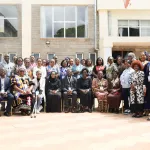
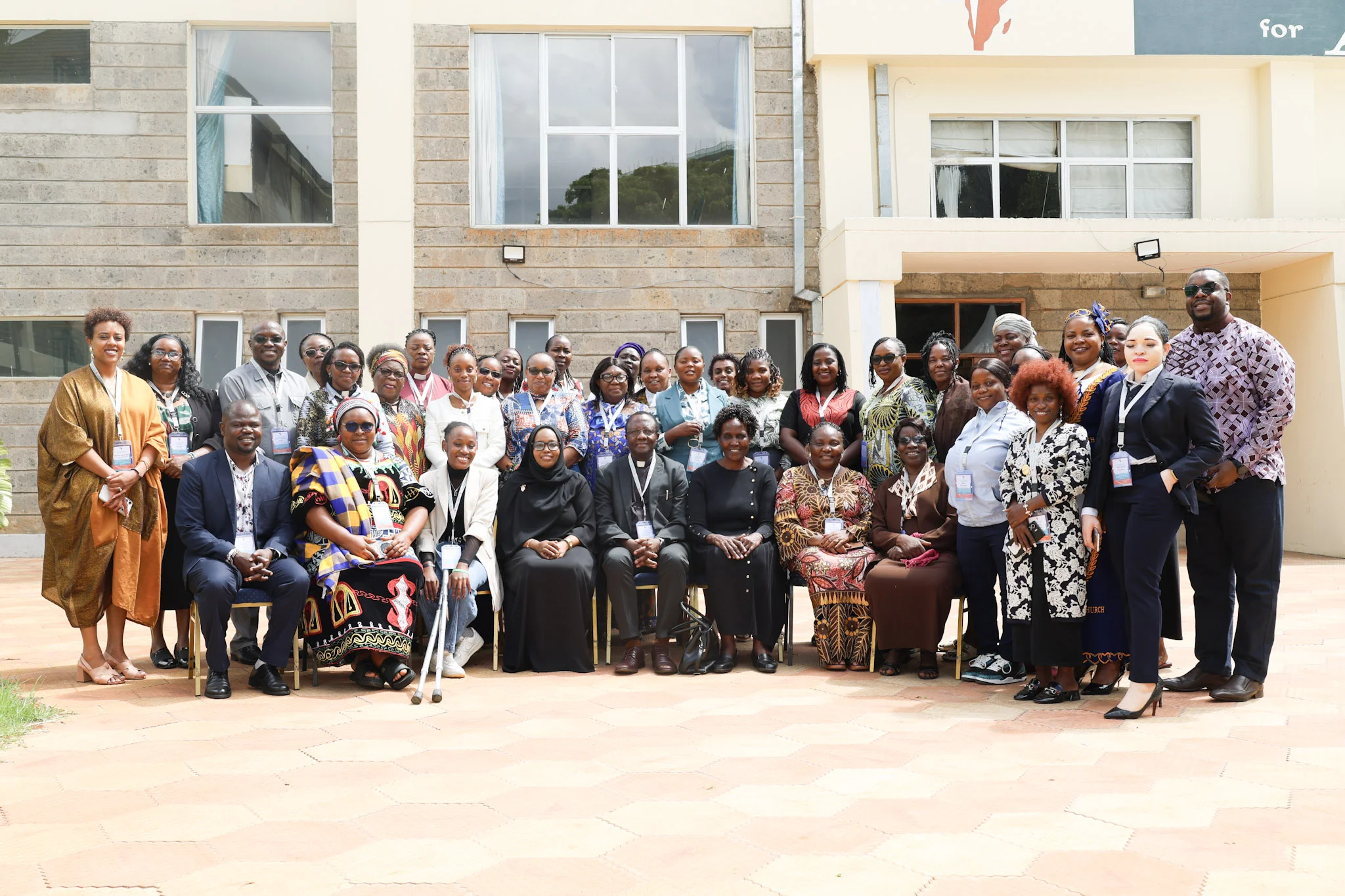
In the photo: Group photo of the Participants. [Courtesy: Ms. Faustina Nillan]