Tax & Economic Justice
Tax and economic justice is central to sustainable development in Africa. Much as there has been remarkable progress recorded in recent years, Africa suffers economic inequalities in all the sub-regions across the continent.
In a continent marked by both vast wealth and persistent poverty, economic and tax injustices remain significant barriers to development, dignity, and equality. Across Africa, the gap between the rich and poor continues to widen. Illicit financial flows, tax evasion by multinational corporations, and regressive tax systems also reamin significant barriers to domestic resource mobilisation to finance development on the continent. Responding to these injustices is not only a civic duty but also a moral and spiritual obligation rooted in biblical principles of justice, stewardship, and love for neighbour.
The Christian faith calls for social justice and the protection of the vulnerable. Scriptures such as Proverbs 31:8–9 urge believers to "speak up for those who cannot speak for themselves" and "defend the rights of the poor and needy." By depriving communities of resources needed for healthcare, education, clean water, and employment, tax and economic injustices, violate these moral imperatives. Christian African youth need to be empowered and mobilized to view the fight against economic exploitation and unfair tax systems as part of their Christian witness in the world and ensure that their voices amplify the call for systems that reflect God's justice and righteousness.
Christian youth are uniquely positioned to lead in this area because they are often active in churches and faith-based institutions that already play critical roles in shaping values and driving community development. By using these platforms to educate congregations on the real impact of tax evasion and corrupt economic practices, young Christians can mobilize moral consciousness and civic action. When this is done, the church can become a hub for fiscal justice advocacy, helping communities understand that unjust economic systems are not just political problems, but spiritual ones that demand a prophetic response. This data depository aims at availing online resources that faith communities can use to engage in transformative advocacy for tax and economic justice.
‘Taxation is not an exclusive domain of economic planners and administrators. It is, more importantly, the concern of the people. The people should be involved in the process of deciding what to tax, whom to tax, and how to tax, as well as in collecting and spending tax revenues.’
Citizens’ Review of the Tax System, the Philippines, 1994
| Income Tax | Tax on salaries, wages, or profits. |
| Corporate Tax | Tax on business profits. |
| Value Added Tax (VAT) | Tax added to goods/services prices |
| Property Tax | Tax on land, buildings, or property. |
| Economic Justice | Fair distribution of wealth and opportunities. |
| Tax Justice | Fair, transparent, and accountable collection and use of taxes. |
| Equity | Fairness in tax and economic policies. |
| Transparency | Clear sharing of information about budgets and spending. |
| Accountability | Leaders held responsible for proper use of public resources. |
| Tax Evasion | Illegal non-payment of taxes. |
| Tax Avoidance | Legal methods to reduce taxes, sometimes exploiting loopholes. |
| Corruption | Abuse of power for personal gain. |
| Misappropriation | Using funds for unintended or illegal purposes. |
| Stewardship | Responsible management of resources, guided by ethical and faith values. |
| Good Governance | Transparent, accountable, participatory, and ethical leadership. |
| Policy Reform | Changing laws to improve fairness, efficiency, and accountability. |
| Inequality | Unequal distribution of wealth and resources. |
| Sustainable Development | Growth that meets today’s needs without harming the future. |
| Economic Opportunity | Fair access to jobs, education, and resources. |
| Shared Prosperity | Growth that benefits all, not just a few. |
| Advocacy | Actively supporting policies for fairness and justice. |
| Faith-Based Leadership | Leading with moral, ethical, and spiritual principles. |
| Patriotism | Loving and serving one’s country through responsible action. |
Click on the Tabs below for Advocacy Toolkits and Online Resources for Tax and Economic Justice
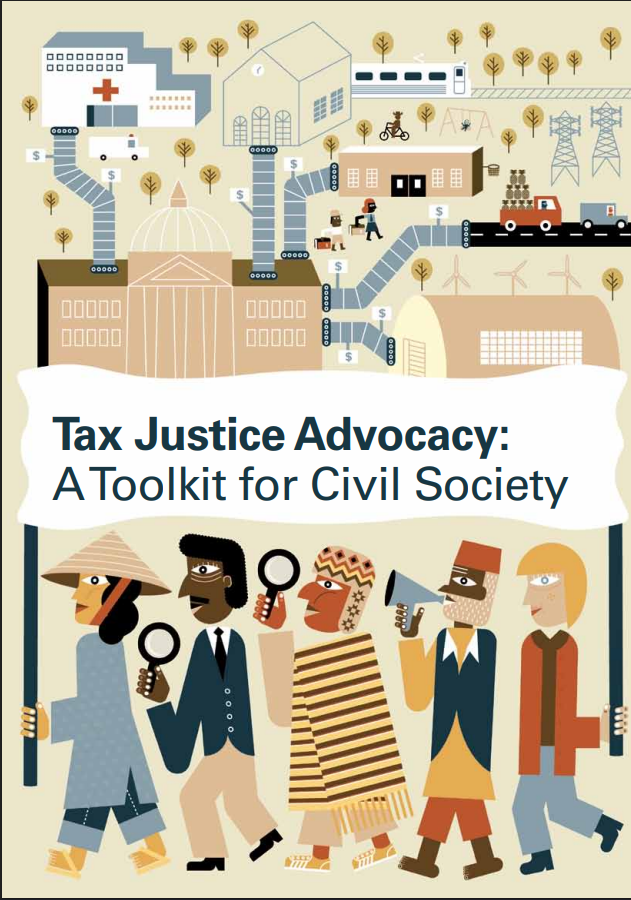
The Tax Justice Advocacy Toolkit talks comprehensively about taxation (How it’s a concern of people and see how people can be involved in the process of deciding what to tax, whom to tax, how to tax and how to collect and spend the revenues from the taxes collected.
During the Nairobi declaration on tax and development in March 2010, participants acknowledged that weak and ineffective taxation hinders economic development and they committed to working together to improve domestic and international tax systems.
The tax Justice Advocacy Toolkit aims at strengthening capacity of civil society organizations to understand and analyze tax issues, develop advocacy strategies for tax justice, carry out research, plan and learn from others that advocate tax reforms.
Great knowledge and information can be gathered from this Toolkit through interacting with the following chapters.
Chapter 1: Why Bother with Tax? Establishes the foundation for tax justice advocacy by explaining why tax matters, functions of taxation, strengthening accountability between governments and citizens, and influencing social and environmental behavior. The chapter further highlights tax justice challenges such as regressive taxes, weak tax administration, excessive tax incentives, and revenue losses.
Chapter 2: How to Develop Your Tax Advocacy Strategy. Provides guidance to plan advocacy, defines advocacy objectives, select advocacy approaches and tools for monitoring and evaluating advocacy efforts.
Chapter 3: Doing Your Tax Research focuses on building evidence for advocacy, methods for research, analyzing government budgets, examining corporate tax practices, and assessing how tax systems affect the poor.
Chapter 4: Getting Active on Tax translates strategy and research into action. It outlines practical advocacy activities such as policy engagement, media work, public campaigning, coalition building, and collaboration at national and regional levels.
Note
The toolkit can be used for organizational learning, training workshops, research, advocacy planning, and campaigns aimed at promoting fair, transparent, and good tax systems.
It can be accessed at:
https://actionaid.org/sites/default/files/tax_justice_advocacy_toolkit.pdf
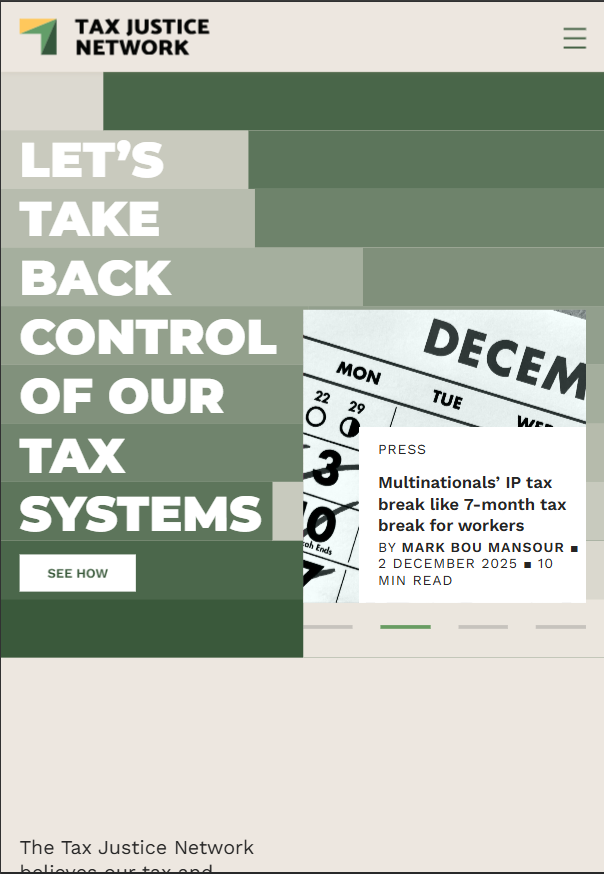
Tax Justice Network is a global research and advocacy organization dedicated to making tax systems fairer, more transparent, and accountable. The network believes that tax and financial systems should work for everyone and not just the wealthy, how unfair tax practices cause inequality, corruption, and economic injustice. Through their website, research reports, data tools, country profiles, indexes, policy trackers, news, blogs, and educational content can be found that explain how tax systems work and how they can be improved.
It also helps to show how tax abuse, illicit financial flows reduce government revenues and make it harder to pay for services like health, education, and infrastructure. For example, research shows that Africa has lost more than US$1 trillion through illicit financial flows over recent decades, with a large share linked to corporate tax abuse and weak international tax rules.
The website can be used by different African people to understand tax challenges, build evidence, design advocacy strategies, review tax policies in our African countries, monitor government performance, and educate citizens about why fair taxation matters and above all, the site provides evidence, tools, and arguments to help promote tax justice in Africa by highlighting problems in current tax systems and seeing how better tax reforms can be achieved.
The website is: https://taxjustice.net
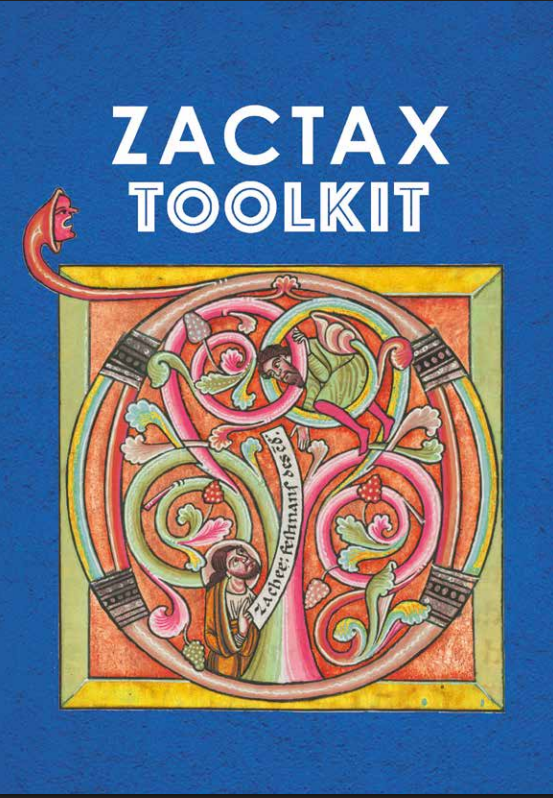
The ZacTax Toolkit is an ecumenical educational and advocacy resource created by a coalition of global church bodies, including the World Communion of Reformed Churches (WCRC), the World Council of Churches (WCC), the Lutheran World Federation (LWF), the Council for World Mission (CWM), and the World Methodist Council under the New International Financial and Economic Architecture (NIFEA) initiative. Its aim is to equip churches, faith communities, theological educators, and civil society partners with theological insights, practical tools, and campaign resources for engaging with issues of tax justice, economic inequality, ecological debt, and reparations in both local and global contexts.
Named after the biblical figure Zacchaeus (Luke 19:1-10), a tax collector transformed by his encounter with Jesus, the ZacTax Toolkit frames just taxation as a faith-based imperative. The toolkit highlights how fair and equitable tax systems are fundamental for funding public services, reducing poverty and inequality, and holding corporations and individuals accountable for contributing to the common good. It also calls for addressing structural injustices, including colonial exploitation, slavery’s legacy, and ecological harm.
The toolkit contains theological reflections, Bible studies, liturgical resources, discussion guides, practical advocacy suggestions, and campaign strategies. Churches can use it to educate their congregations, facilitate study groups, integrate social justice into worship and teaching, and engage with national and international advocacy for more equitable tax laws and economic policies. This resource supports faith communities in translating their ethical and spiritual commitments into concrete action for economic and ecological justice.
It can be accessed at: https://wcrc.eu/wp-content/uploads/2024/03/ZacTaxToolkitA5Digital.pdf
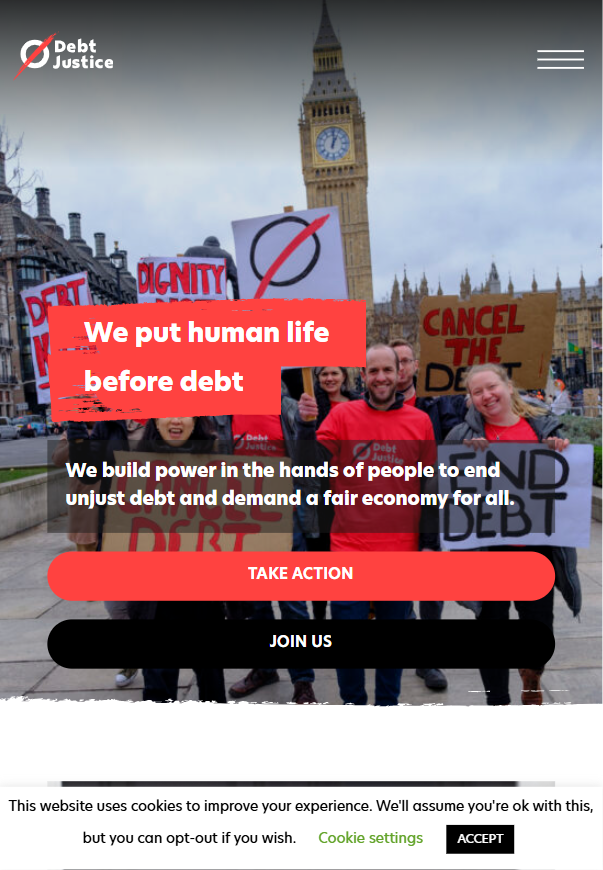
Debt Justice (formerly Jubilee Debt Campaign) is a UK-based non-profit campaigning organization dedicated to challenging and ending unjust and unsustainable debt that deepens poverty, inequality, and economic instability both globally and within the UK. The initiative draws its inspiration from the biblical concept of Jubilee, a periodic cancellation of debts that symbolized restoration, freedom, and economic reset for individuals and communities. The organization’s work engages in both sovereign debts owed by governments of lower-income countries and personal debt affecting households in the UK.
Debt Justice produces a wide range of resources and educational materials that explain how debt systems function, why certain debts can be harmful or illegitimate, and what fair and humane alternatives could look like. These materials include research reports, briefings for policymakers, campaign guides and toolkits, leaflets and action cards, and parliamentary briefings. They address issues such as global debt crisis, the legacy of colonialism, climate-related debt burdens, the UK household debt crisis, and policy proposals for systemic reform.
The Jubilee Debt resources are designed to be practical tools for activists, educators, church groups, student organizations, NGOs, and community advocates. Users can employ them to raise awareness, organize campaigns, engage with politicians, and influence public discourse on economic justice. Whether for teaching, advocacy strategy, or policy engagement, the resources help individuals and groups understand the mechanisms of debt and mobilize collective action to demand fairer financial systems that prioritize human well-being over profit.
Link to the resource: https://debtjustice.org.uk
As many would have it, relevant and reliable information is of essence for any setup, individual, community or nation if at all accurate and timely decisions are to be made. In the middle of a world where new, intriguing and unpredictable events unfold every now and then, it is dangerously dangerous to lag behind regards to information.
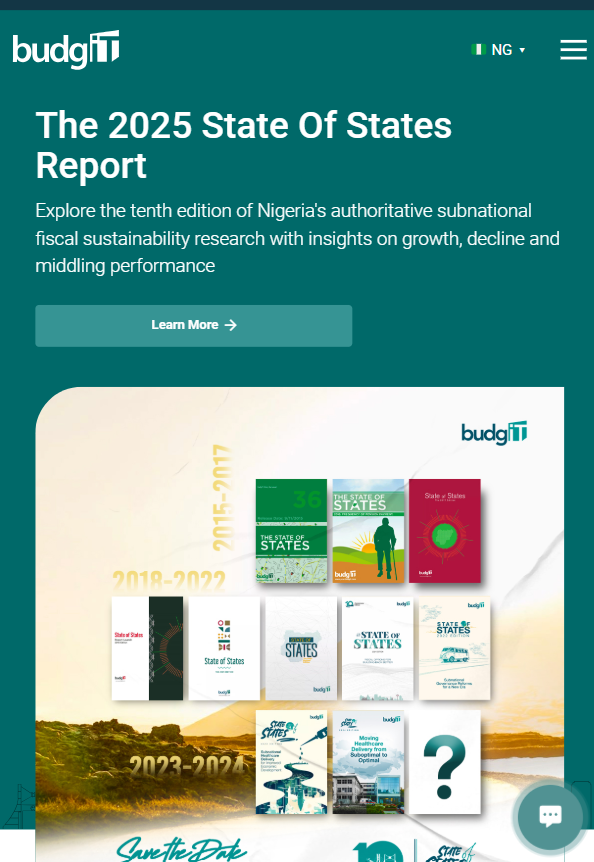
BudgIT has pioneered this move from the year 2011 with an unwavering bid to use creative technology to simplify public information, stimulating a community of active citizens and enabling right to demand accountability, institutional reforms, effective service delivery and an equitable society. The vision being to lead its space in bridging the information gap between citizens. Since its inception, BudgIT has never lost its eyes on the goal. The goal in a nutshell "TO PROVIDE OPEN DATA TO THE PUBLIC FOR TRANSPARENCY AND ACCOUNTABILITY FROM GOVERNMENTS"
Proximity, trust, openness, innovation and personal accountability are values at the center of its operation as an organization. The organization trades its root in Nigeria and has expanded its operations into Ghana, Liberia, Senegal, Sierra Leone, USA among other nations.
Link: https://budgit.org
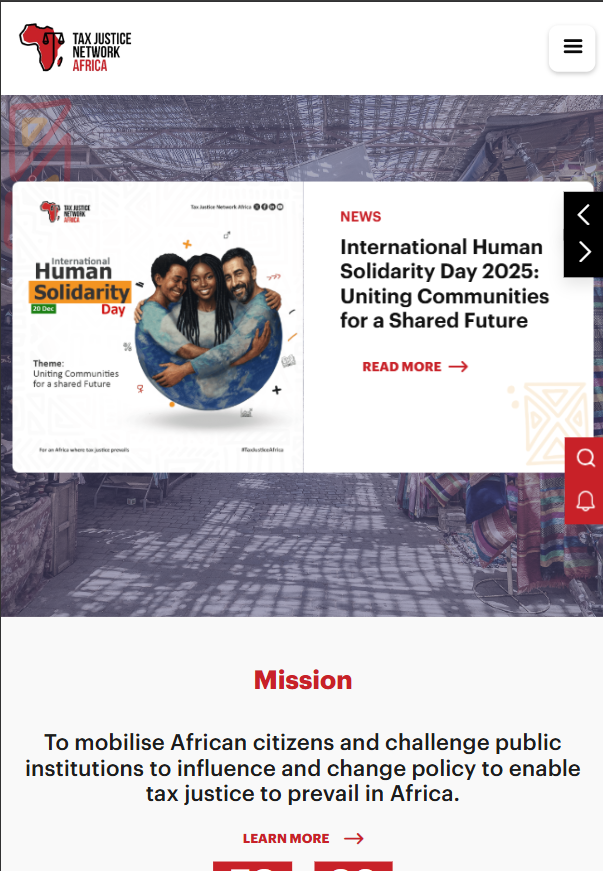
Tax Justice Network Africa (TJNA) is a regional network of civil society organizations. It is composed of think tanks, trade unions, feminist groups, youth led & faith-based organizations, and community-based organizations spread across African countries.
Its mission is to mobilize African citizens and challenge public institutions to influence and change policy to enable tax justice to prevail in Africa. They are doing so to create a just, prospering, self-reliant and integrated Africa sustainably harnessing its resources to enable its people to lead a dignified life.
TJNA commits itself to work in solidarity with human rights and economic justice movements to realize the convergence of all justice and human rights struggles.
TJNA runs a secretariat based in Nairobi, which coordinates its operations. The network envisions an Africa where tax justice prevails and contributes to equitable, inclusive, and sustainable development. In spearheading tax justice in Africa, it advocates for pro-poor tax policies and tax systems that curb leakages and optimize domestic resource mobilization (DRM). Through policy influencing, it mobilizes citizens and institutions to demand fair tax systems.
WHAT THEIR WEBSITE CONTAINS
The Tax Justice Network Africa (TJNA) website contains array of resources, information on its advocacy work on global reforms, improved tax transparency and the taxation of digital services. It focuses on transparent and equitable tax policies, including analysis of tax incentives, expenditures, and investment treaties to ensure they benefit African development goals. The website has research publications that provides in-depth studies with articles and analysis on current tax matters in Africa. Not forgetting information on tools like the Anti-illicit financial flows policy tracker and data related to beneficial ownership. All these content initiatives to promote fair tax systems and combat illicit financial flows across the continent.
The website highlights TJNA’s major ongoing activities and networks like Pan-African Conference on illicit Financial Flows and Taxation (PAC), African Parliamentary Network on illicit Financial Flows and Taxation (APNIFFT) AND International Tax Justice Academy (ITJA).
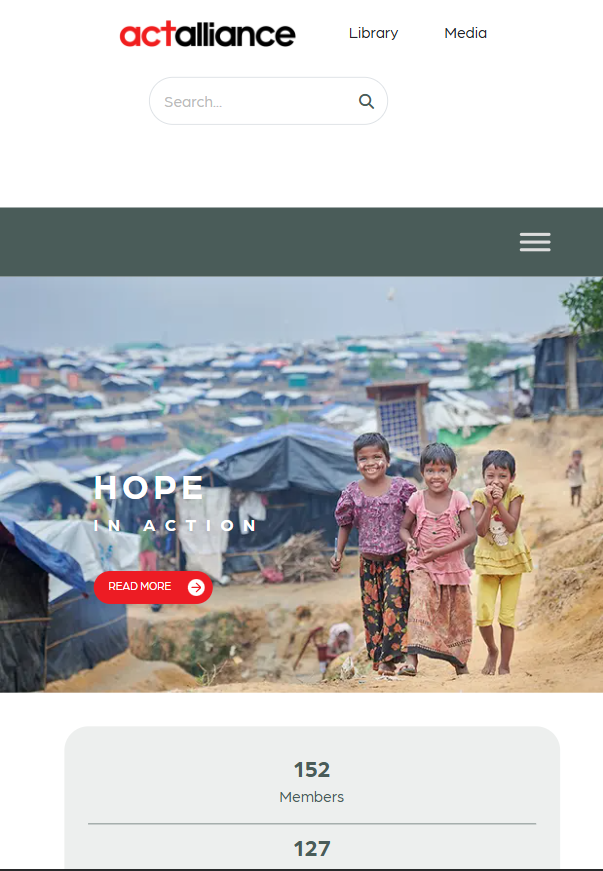
ACT-Alliance advocates for tax justice as a critical component of eradicating poverty, reducing inequalities, and funding public services (such as healthcare and education) that support human rights and climate action. ACT Alliance works with a wide range of partners, including the Global Alliance for Tax Justice (GATJ), the Tax Justice Network, and other civil society organizations, to amplify voices and build a cohesive movement for reform. They work towards reforming international tax rules to ensure that wealth is redistributed towards impoverished communities and essential public services.
Their campaign involves; Advocacy for a UN Tax Convention, Challenging Illicit Financial Flows, Promoting Progressive Taxation, Integrating Tax with Gender and Climate Justice, Empowering Local Voices.
The alliance uses research and data to inform its advocacy, showing how tax abuse impacts human rights and development goals, and holds governments and institutions accountable.
WHAT THE WEBSITE CONTAINS
ACT Alliance website; Explains it's a large network of over 140 faith-based organizations working in development, aid, and advocacy.
It Details their focus on Climate Justice, Gender Justice, Peace & Human Security, Migration, and Humanitarian Response.
The website showcases emergency responses, disaster risk reduction, and locally-led efforts, often with project examples.
It also Describes their faith and rights-based advocacy at all levels for justice and human rights.
They have provided Information on their commitment to standards like the Core Humanitarian Standard (CHS) and safeguarding policies.
- Publications: Hosts reports, analyses, and resources from their work in different regions (e.g., Latin America).
- Structures & Members: Details of the alliance's governance (General Assembly, Board) and its regional forums.
In essence, the site provides an overview of a global, faith-inspired alliance working for rights, justice, and resilience through development, humanitarian aid, and advocacy, with content reflecting real-world projects and policies.
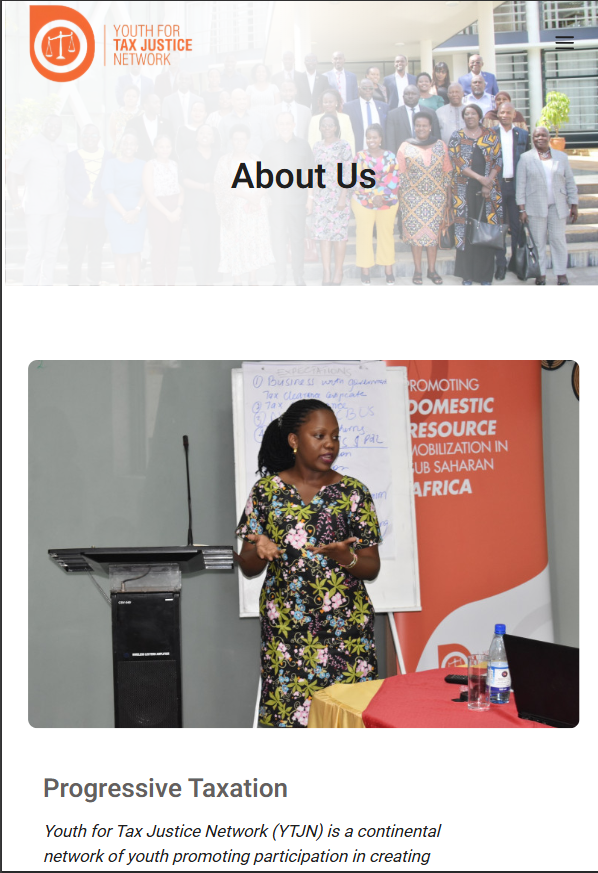
The Youth for Tax Justice Network (YTJN) is a Pan-African youth-led organization focused on promoting fair and equitable tax systems, strong public finance management, and youth engagement in economic decision-making across Africa. It is a non-profit network working to ensure that young people have a voice in how taxes are raised, how public resources are distributed, and how natural resources are managed for sustainable development.
The YTJN tool, created through the ytjn.org website, serves as an information hub and advocacy platform. It contains descriptions of the organization's mission, values, and program areas, including youth economic empowerment, revenue governance, youth engagement, and knowledge management. Through these sections, the site explains why tax justice and resource transparency matter for youth and for broader social and economic transformation.
In addition to organizational information, the website publishes blog articles, statements, and updates about current events and campaigns related to tax policy, climate finance, public debt, and global economic governance. For example, YTJN has posted about creative arts competitions, tax talks at United Nations sessions, and calls for government accountability following youth protests in Kenya. These posts help turning complex fiscal issues into accessible stories and opportunities for engagement.
The tool can be used by young activists, civil society advocates, researchers, policymakers, and students who want to understand tax justice and fiscal accountability from a youth perspective. It provides educational resources, highlights ways to participate in advocacy and creative challenges, and connects users to a broader network of organizations working on economic justice in Africa. Overall, YTJN empowers young people to actively shape fairer tax systems and contribute to sustainable and inclusive development across the continent.
This tool is designed to support tax and economic justice advocacy by making complex debt and public finance information easier to understand and use. Drawing from the English section of the research report “Understanding Key Drivers of Africa’s New Debt Crisis”, the tool brings together evidence-based data, analysis, and insights on public debt and its social impacts, especially in African countries.
At its core, the tool focuses on how rising public and external debt affects ordinary people. It shows that while borrowing can support development, unsustainable debt has serious consequences for social services such as education, health, water, and social protection. Using the cases of Zambia, Ghana, and Burundi, the resource highlights how debt repayment often diverts public funds away from these essential services, worsening inequality and poverty. It also explains how factors such as COVID-19, election-related spending, weak governance, and the rise of new creditors have contributed to the current debt crisis.
This tool contains country-level data, policy analysis, and explanations of debt trends, creditors, and debt management systems. It also includes discussions on transparency, accountability, and public participation in debt management. Importantly, it links economic data to human rights and social justice, showing that debt is not only a financial issue but also a moral and development concern.
This resource can be used by civil society organizations, faith-based groups, researchers, journalists, and advocates. It supports evidence-based advocacy, public education, policy dialogue, and budget tracking. Users can rely on the data to question unjust debt practices, promote fair taxation, and call for responsible borrowing and lending. Overall, the tool strengthens collective efforts to advance tax justice, economic justice, and the
protection of people’s social and economic rights.